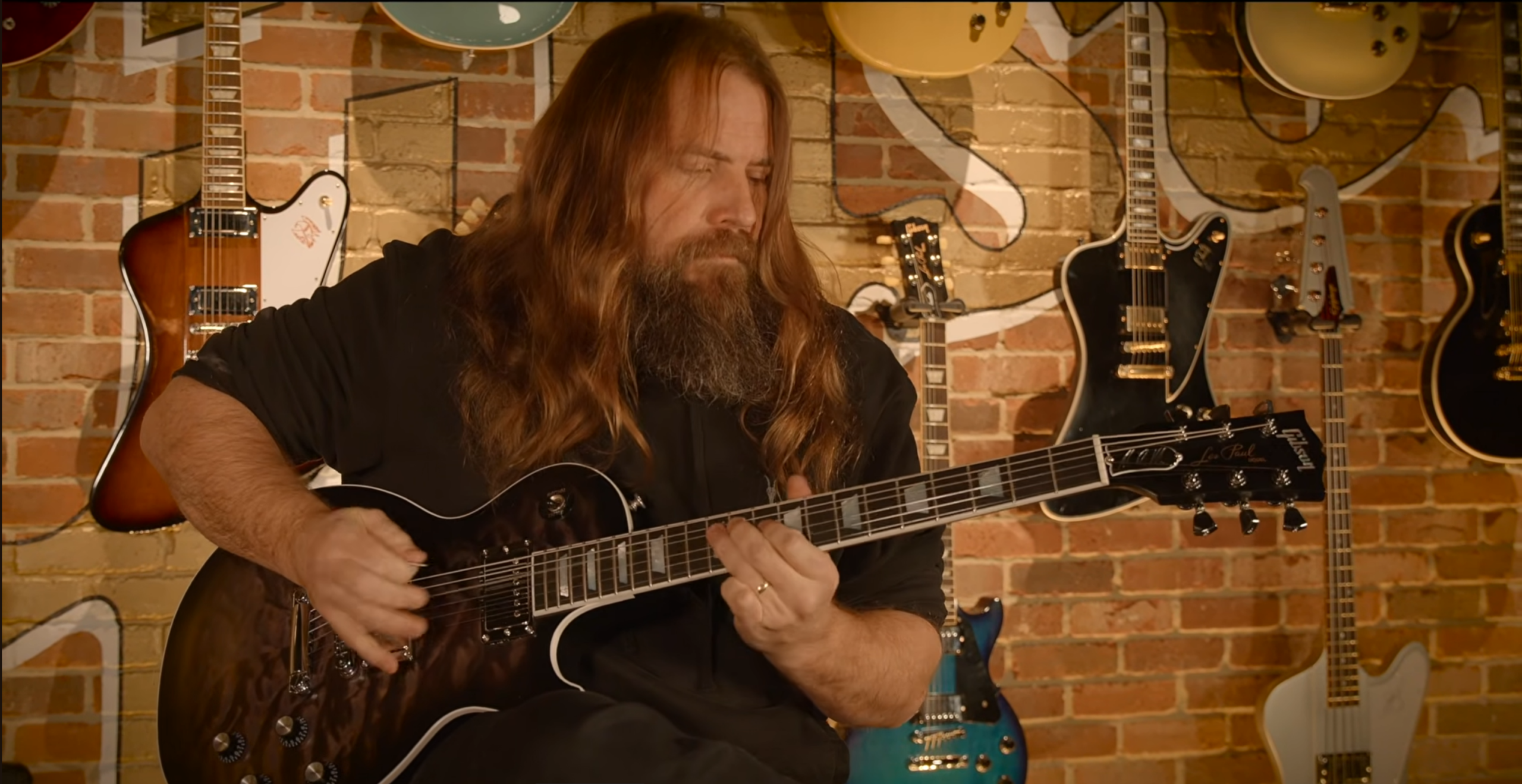
Lamb Of God are not trying to cosplay their own past. But according to Mark Morton, the band’s new album Into Oblivion was shaped by a deliberate return to the instincts, influences and headspace that fed their most revered material in the first place. The album arrives on March 13, 2026, and Morton says part of the writing process involved revisiting what the band had drifted away from over time.
Speaking in a recent interview with Premier Guitar’s Off The Record, Morton explained that the process was sparked in part by Lamb Of God’s Ashes Of The Wake anniversary run, which forced him to go back and relearn songs he had not played in decades. That experience did more than refresh his memory. It sent him back into the creative mindset he was in when those songs were first written, and from there, back into the music that was fuelling him at the time. He cited bands including Meshuggah, At The Gates and The Haunted, alongside Richmond acts from the band’s local scene, as key touchstones he returned to while preparing material for Into Oblivion.
That is the interesting part. Morton is not describing a nostalgia exercise or some cynical “back to basics” campaign line. He is describing a band trying to find the voltage in its own foundations again.
For legacy heavy bands, that is a dangerous line to walk. Lean too hard into the past and you start sounding like a tribute act to yourself. Push too far in the other direction and fans accuse you of abandoning the thing that made you matter. Morton’s comments suggest Lamb Of God are fully aware of that tension. He said the band has its own term for ideas that feel too safe or overly familiar: “stock.” In other words, a riff can sound good and still get rejected if it feels too generic, too comfortable or too much like Lamb Of God on autopilot.
That might be the most reassuring thing fans could hear.
A lot of veteran metal bands talk about growth, but what they really mean is polish. Others talk about evolution when what they are actually offering is dilution. What Morton describes sounds more useful than either of those. It is not reinvention for its own sake, it is a conscious attempt to reconnect with the mentality that made the band dangerous while filtering it through decades of experience.
The way Into Oblivion was made also reflects that shift. Whereas 2022’s Omens was recorded in a more immersive major-studio setting at Henson Studios in Hollywood, Morton said much of the new album’s writing, pre-production and guitar tracking happened back in Virginia, including work done in his own studio. He framed that change as part of a broader effort to “shake the snow globe” and stop the process from becoming stale.
That matters because heavy music has always lived or died on sincerity. Fans can hear when a band is stretching because it has something to say, and they can also hear when it is moving pieces around because standing still would look embarrassing. Morton’s account makes Into Oblivion sound like the product of a band still interrogating itself rather than just servicing its catalogue.
There is also something telling in the specific influences he named. Meshuggah, At The Gates and The Haunted are not references you casually throw around for flavour. They point toward precision, abrasion, movement and tension. Add the impact of Richmond’s underground history to that, and the picture becomes clearer: Lamb Of God were not trying to rewind the clock. They were trying to remember what it felt like before the machine got too familiar.
If that is what happened, Into Oblivion could land as more than just album number ten. It could be the sound of a veteran band refusing to become its own off-the-shelf version.